How to Plan Chateau Welcome Dinners Guests Love
A wedding weekend begins long before the ceremony. When you plan chateau welcome dinners with care, the first shared meal becomes the moment guests exhale, find familiar faces, and understand that they have arrived somewhere extraordinary. It is less formal than the wedding breakfast and more meaningful than a simple meal: an evening designed to gather everyone into the story of your celebration.
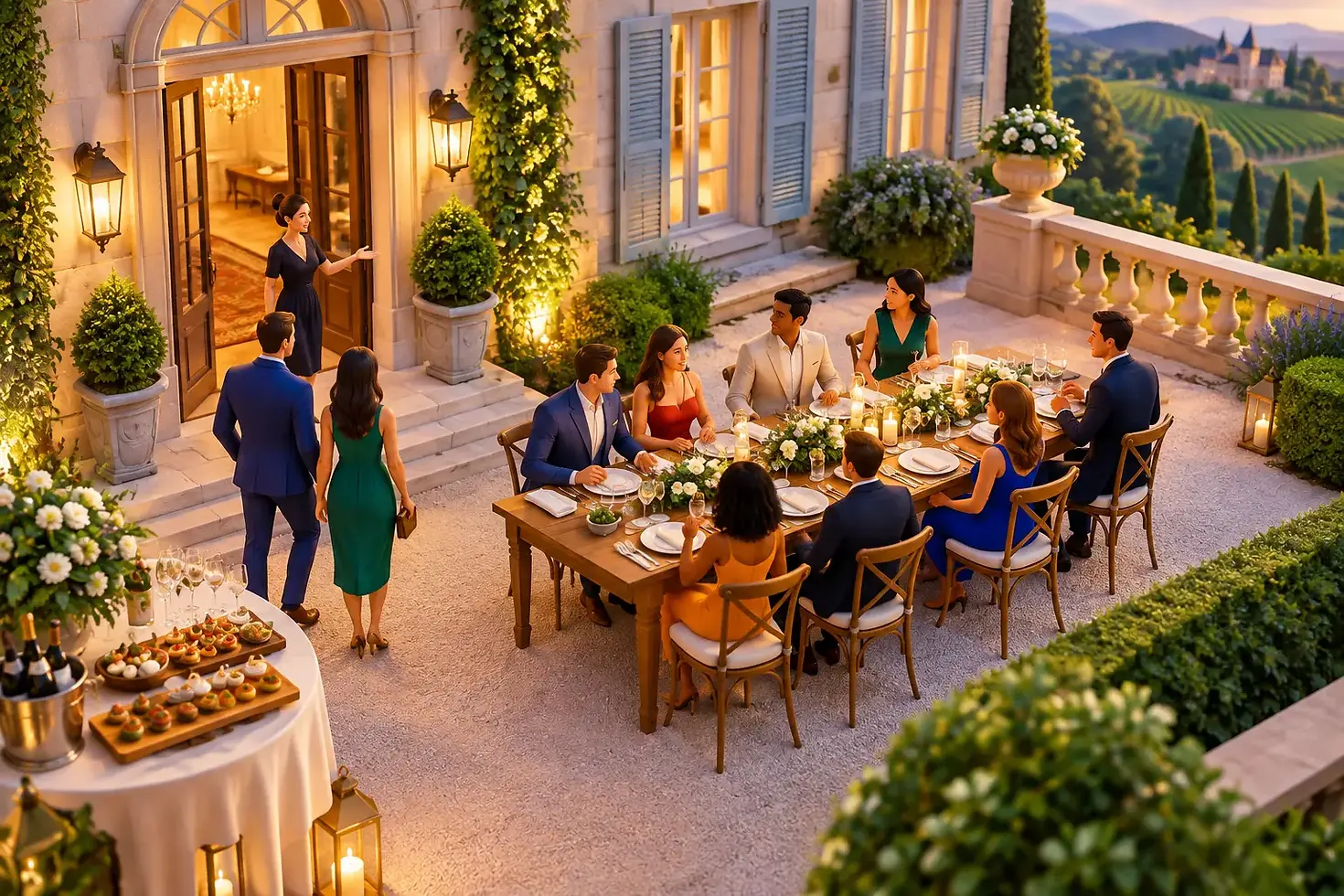
At a private French estate, that story can begin with golden evening light across the gardens, glasses raised beneath old stone walls, and a table full of people who have traveled far to be there. The secret is not trying to recreate the wedding reception a night early. A wonderful welcome dinner feels relaxed, generous, and unmistakably personal.
Plan Chateau Welcome Dinners Around Arrival Reality
The most beautiful dinner schedule is useless if half your guests are still checking in, refreshing themselves after travel, or searching for their luggage. Start with the practical rhythm of arrivals. Guests coming from the US, Canada, Ireland, or the UK may be navigating long journeys, time differences, and transfers. Build in breathing room before asking everyone to be social.
For most destination wedding groups, a cocktail hour beginning around 6:30 or 7:00 p.m. works well, followed by dinner at 7:30 or 8:00 p.m. This gives early arrivals time to settle in and allows later guests to join without walking straight into a seated course. If a significant portion of the group is arriving that day, consider a more flexible, grazing-style evening rather than a plated dinner with a strict start time.
A two-night celebration may call for something beautifully informal: aperitifs, local cheeses, charcuterie, salads, and warm dishes served family-style. If guests have arrived a day ahead and have had time to settle, you can create a more composed dinner with a thoughtful menu and longer speeches. It depends on the energy of your group, not a rulebook.
At Chateau Eyparsac, the benefit of an exclusive-use stay is that guests are not rushing away after dinner. They can wander back to their rooms, linger over another glass of wine, or take a moonlit walk through the grounds. That ease is worth protecting in every decision you make.
Choose a Setting That Introduces the Weekend
A welcome dinner should reveal the atmosphere of the château without using every visual idea reserved for the wedding day. Think of it as an elegant first chapter. The location you choose can set the tone immediately.
Garden dining for a sunlit arrival
Outdoor dining is especially lovely in late spring and summer, when the light lasts and the countryside feels at its most generous. A long table in the garden, simple linen, taper candles, and seasonal flowers can look effortlessly romantic. Leave enough space around the table for guests to circulate during aperitifs rather than seating everyone the moment they arrive.
This option works best when you have a weather plan that feels just as welcoming. No one wants to see hosts anxiously watching the forecast. A renovated barn or covered indoor dining space can make a change of plan feel intentional rather than disappointing, particularly when candlelight, flowers, and music carry the atmosphere indoors.
A barn supper with warmth and character
For an early-season celebration, an autumn wedding, or a group who loves a lively supper, a characterful barn setting offers immediate warmth. It can hold the energy of a long-table feast, allow for a small welcome speech, and give guests a comfortable place to stay late into the evening.
Keep the styling softer and more relaxed than the wedding reception. Bistro chairs, abundant candles, handwritten place cards, and a menu printed on a single card are often more inviting than elaborate layers of décor. The château itself already provides the sense of occasion.
A poolside or terrace aperitif
If your dinner is indoors, begin outside whenever possible. A terrace or poolside aperitif gives the group that first cinematic view of the estate and creates natural conversation before everyone sits down. A signature cocktail, Champagne, or a nonalcoholic sparkling option makes the welcome feel considered without overcomplicating it.
Let the Menu Feel Generous, Not Overly Formal
Guests will remember a welcome dinner for how it made them feel. Food plays a large role in that feeling, especially after travel. Aim for generous portions, recognizable pleasures, and flavors that connect guests to France without asking them to be adventurous at every course.
Family-style dining is often ideal for this first evening. Shared platters encourage conversation between guests who may be meeting for the first time, and the rhythm feels celebratory without becoming stiff. A seasonal starter, a comforting main dish, beautiful vegetables, fresh bread, and a simple dessert can be far more successful than an ambitious multi-course tasting menu.
Consider dietary needs early, not as an afterthought. Ask for them with your RSVP and share the information clearly with your catering team. A vegetarian dish should feel like a delicious choice in its own right, while gluten-free and allergy-conscious guests should be able to relax rather than repeatedly ask what is on their plate.
There is also no need to offer the same level of wine service planned for the wedding. A small, well-chosen selection of red, white, sparkling, beer, and thoughtful alcohol-free drinks is usually enough. Save a few surprises for the next day.
Make Seating Easy, Then Make It Meaningful
Assigned seating can be useful at a destination welcome dinner, particularly if families and friendship groups do not know one another. It avoids the uncertainty of an open table and quietly helps the room come together. The best approach is usually relaxed structure: assigned tables, but no rigid formality around each individual chair.
Mix guests who will enjoy meeting, but do not treat the dinner like a networking exercise. Couples who have traveled with close friends may appreciate sitting near them on the first night. Parents and older relatives may value a quieter end of the table. Your wedding party can help connect groups, but they should also be allowed to enjoy the evening.
If the group is smaller, one long table creates a wonderful feeling of shared anticipation. For larger parties, several tables may be more comfortable and make service easier. The choice should support conversation, not simply the photograph.
Keep Speeches Short and the Evening Open
A welcome dinner is the right time for warmth, gratitude, and a little orientation. It is not the night for a full program. One brief welcome from the couple, perhaps a few words of thanks to guests who have traveled so far, is enough.
You might also share a few helpful details about the weekend: when breakfast begins, where guests should gather before the ceremony, or the time of any next-day activity. Deliver these details lightly, then let the evening return to conversation.
Music should do the same job. An acoustic guitarist, a gentle playlist, or French-inspired background music can create atmosphere while keeping the room easy to talk in. A welcome dinner does not need dancing to be memorable. If spontaneous dancing happens, enjoy it. If guests prefer another drink under the stars, that is equally perfect.
Add One Personal Detail Guests Can Carry Into the Weekend
The most shareable welcome dinners are rarely the most elaborate. They have one detail that feels distinctly like the couple: a favorite regional wine, a hand-drawn weekend itinerary at each place setting, a dessert inspired by a family tradition, or a small note welcoming every guest to the château.
Avoid turning every detail into a favor. The purpose is connection, not clutter. A simple printed card can be especially useful, giving guests a sense of what lies ahead while allowing the excitement of the weekend to build naturally.
For a multi-day celebration, this first evening is also your chance to make people feel at home in an unfamiliar place. Point out the places they can enjoy at leisure, from quiet garden corners to the games room or pool, and invite them to use the estate as their own. That invitation changes the mood from attending an event to sharing an experience.
A well-planned château welcome dinner asks very little of guests and gives them a great deal: good food, easy company, and the rare pleasure of being together somewhere beautiful. Let the evening be unhurried. By the time the candles burn low, your guests will not simply know the schedule for the weekend. They will feel part of it.


Comments