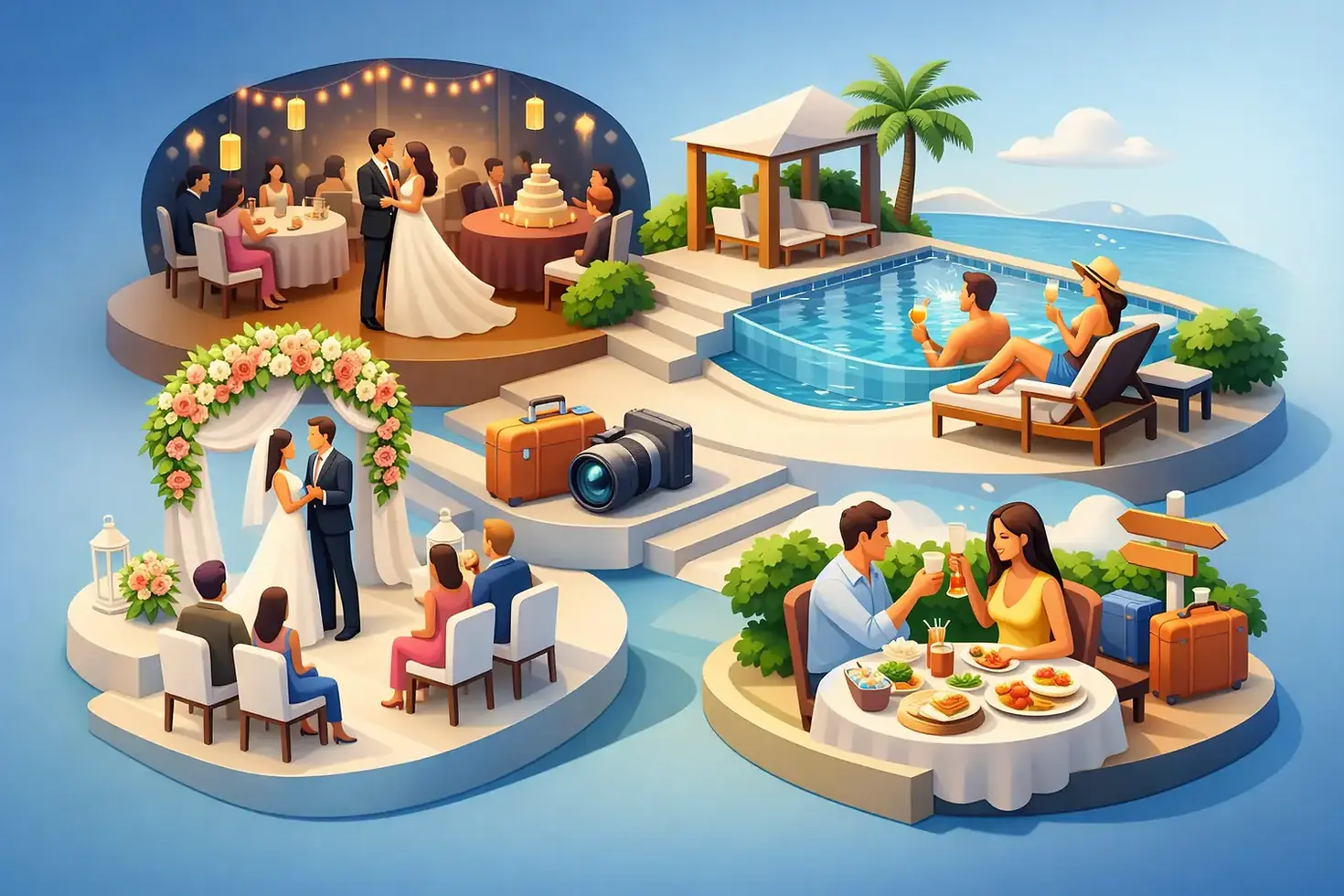
How to Host a Multi Day Wedding Well
A one-day wedding can feel over in a blur. A multi-day celebration gives you something far richer - time for everyone to arrive, settle in, and actually enjoy one another. If you are wondering how to host multi day wedding events without losing the romance to logistics, the answer usually comes down to one thing: choose a setting that feels beautiful and functions beautifully too.
The best multi-day weddings do not feel packed for the sake of it. They feel generous. Guests have space to travel, reconnect, dine slowly, and take in the setting. The wedding itself becomes the centerpiece of a longer experience rather than the only event on the schedule.
Why a multi-day wedding works so well
A destination wedding asks more of your guests than a local evening reception, so it should give more in return. That is why the multi-day format works especially well in a private estate setting. Instead of flying in for a few rushed hours, your guests are welcomed into a shared stay with room for anticipation, celebration, and rest.
This format also helps different groups mingle naturally. Families meet college friends. Older relatives have quieter moments to connect. The wedding party gets meaningful time together outside the ceremony timeline. If your guest list includes people traveling internationally, a longer celebration also makes the journey feel worthwhile.
Of course, more time together means more planning. But it does not need to mean more stress. A well-hosted multi-day wedding is not about creating nonstop entertainment. It is about shaping a relaxed rhythm.
How to host a multi day wedding without overcomplicating it
The simplest way to plan well is to think in layers. First comes the setting, then the guest experience, then the event flow. If the venue handles these foundations with ease, the rest of the celebration feels far more natural.
Start with a property that can support more than one moment. You are not just looking for a ceremony backdrop. You need somewhere guests can stay, gather, dine, and celebrate across several days without feeling moved from place to place. A private château or estate is especially well suited to this because it offers atmosphere and practicality in one location.
Accommodation matters more than many couples expect. If key guests can stay on site, the entire event becomes more intimate and more convenient. Nearby overflow lodging is equally important for a larger celebration. The ideal arrangement keeps everyone close enough to feel included, while preserving comfort and privacy.
Next, think about the emotional arc of the weekend. A welcome evening should feel easy and sociable, not formal. The wedding day should have a clear sense of occasion. A farewell brunch or lunch should feel light, warm, and unrushed. Each gathering should have its own personality, while still feeling part of one story.
Build the wedding around the guest journey
Guests remember how a celebration felt, not just how it looked. That is why the most successful multi-day weddings are planned from the guest perspective as much as the couple's.
Travel is the first part of that experience. Make arrival simple. If guests are coming from abroad, they will appreciate clear timings, transfer guidance, and a sense of what to expect when they reach the venue. Even a luxurious wedding can lose its glow if people begin the weekend confused or tired.
Once guests arrive, the setting should do some of the work for you. Beautiful grounds, elegant shared spaces, and comfortable accommodations immediately create a sense of occasion. Guests can relax into the atmosphere instead of needing constant direction.
Then there is pacing. Not every hour needs to be programmed. In fact, one of the pleasures of a destination wedding in the French countryside is the chance to slow down. Time by the pool, coffee in the garden, a walk through the grounds, and an easy glass of wine before dinner all add to the experience. Those unstructured moments often become the most cherished.
The ideal flow for a multi-day wedding
There is no single formula, but most celebrations work best over two or three nights. That gives you enough time to create a sense of escape without exhausting your guests.
A three-day format is often the sweet spot. The first evening is for arrivals and a welcome dinner or drinks reception. Keep it stylish but relaxed. This is not the moment for a rigid schedule. You want people easing into the setting, seeing familiar faces, and feeling that the celebration has truly begun.
The second day is the wedding itself. If your venue includes separate spaces for getting ready, ceremony, cocktails, dinner, and dancing, the day flows with much more grace. Couples often underestimate how valuable this is. Moving smoothly from one beautiful setting to another allows the day to build naturally instead of feeling interrupted.
The final morning or afternoon is for a farewell gathering. This can be a brunch, garden lunch, or poolside meal depending on the style of your celebration. It offers one last chance to be together before departures begin. It also softens the abruptness that often comes after a wedding night.
Some couples add a fourth day, especially if many guests are traveling a long distance. That extra time can be wonderful, but it does depend on your budget and your guests' availability. Longer is not always better. Better planned is better.
Choose beauty, but insist on practicality
Romance matters. For a destination wedding in France, it matters a great deal. But practical details are what protect that romance once guests arrive.
Look closely at how the venue actually works across several days. Is there enough room for guests to spread out comfortably? Are there indoor and outdoor options for dining and entertaining? Is there a dedicated function space for dinner and dancing? Are there quiet corners for older relatives and lively spaces for late-night celebration?
You also want flexibility. Weather, travel delays, and changing numbers all happen. A venue with adaptable spaces gives you breathing room. That is especially valuable in a multi-day format where you are hosting not just one event, but a full shared stay.
This is where exclusive-use venues stand apart. When the estate is entirely yours, the celebration feels private, immersive, and beautifully personal. There is no overlap with other guests, no sense of being squeezed into a hotel schedule, and no compromise in atmosphere. At Chateau Eyparsac, for example, that sense of exclusivity is paired with spaces that genuinely support a wedding weekend - from on-site accommodations and a bridal suite to gardens, a renovated barn, and nearby partner lodging for a wider guest list.
Food, drink, and atmosphere set the tone
For a multi-day wedding, dining is part of the experience, not just a necessity between events. The style of each meal helps shape the mood of the celebration.
Your welcome dinner can be long-table and convivial, with a sense of arrival rather than formality. The wedding meal should feel elevated and memorable, but still suited to the pace of the day. The farewell gathering works best when it feels easy and generous. Guests should leave feeling cared for, not managed.
Drinks matter in the same way. You do not need every event to be lavishly stocked, but each should feel considered. A sparkling toast in the garden, signature cocktails at sunset, wine with a slow dinner, and coffee the next morning all help the weekend feel beautifully complete.
Atmosphere comes from these choices as much as from flowers or styling. Music, lighting, table layouts, and timing all influence whether a celebration feels intimate, glamorous, relaxed, or exuberant. The most elegant weddings usually combine all four in the right measure.
Give your guests enough, not too much
One of the most common mistakes in multi-day wedding planning is trying to fill every hour. It can come from generosity, but it often creates pressure.
Your guests do not need a packed itinerary to have a wonderful time. They need a lovely place to stay, thoughtful hospitality, and a few key moments that bring everyone together. If the setting is special, people are happy simply being there.
This is especially true for destination weddings in countryside estates, where the surroundings are part of the celebration. Let people enjoy the view, the pool, the gardens, and the feeling of being away from ordinary life. A little breathing room gives the whole event more elegance.
Budget with intention
A multi-day wedding does not always mean spending more in every category. Often it means spending differently.
You may decide that guest accommodation and a welcome evening matter more than elaborate decor. Or that a private estate rental offers better overall value than splitting events across multiple venues and transport arrangements. The right investment depends on your priorities.
What matters is clarity. Know where you want the biggest impact: privacy, food, entertainment, guest comfort, or visual setting. When those priorities are clear, your decisions become much easier and the wedding feels more cohesive.
If you want your wedding to feel like a true escape rather than a single event, the multi-day format offers something exceptional. It gives your guests time to arrive fully, celebrate fully, and remember more than just the ceremony. Host it in a place that is both stunning and genuinely equipped for the occasion, and the entire experience becomes part of the love story.


Comments