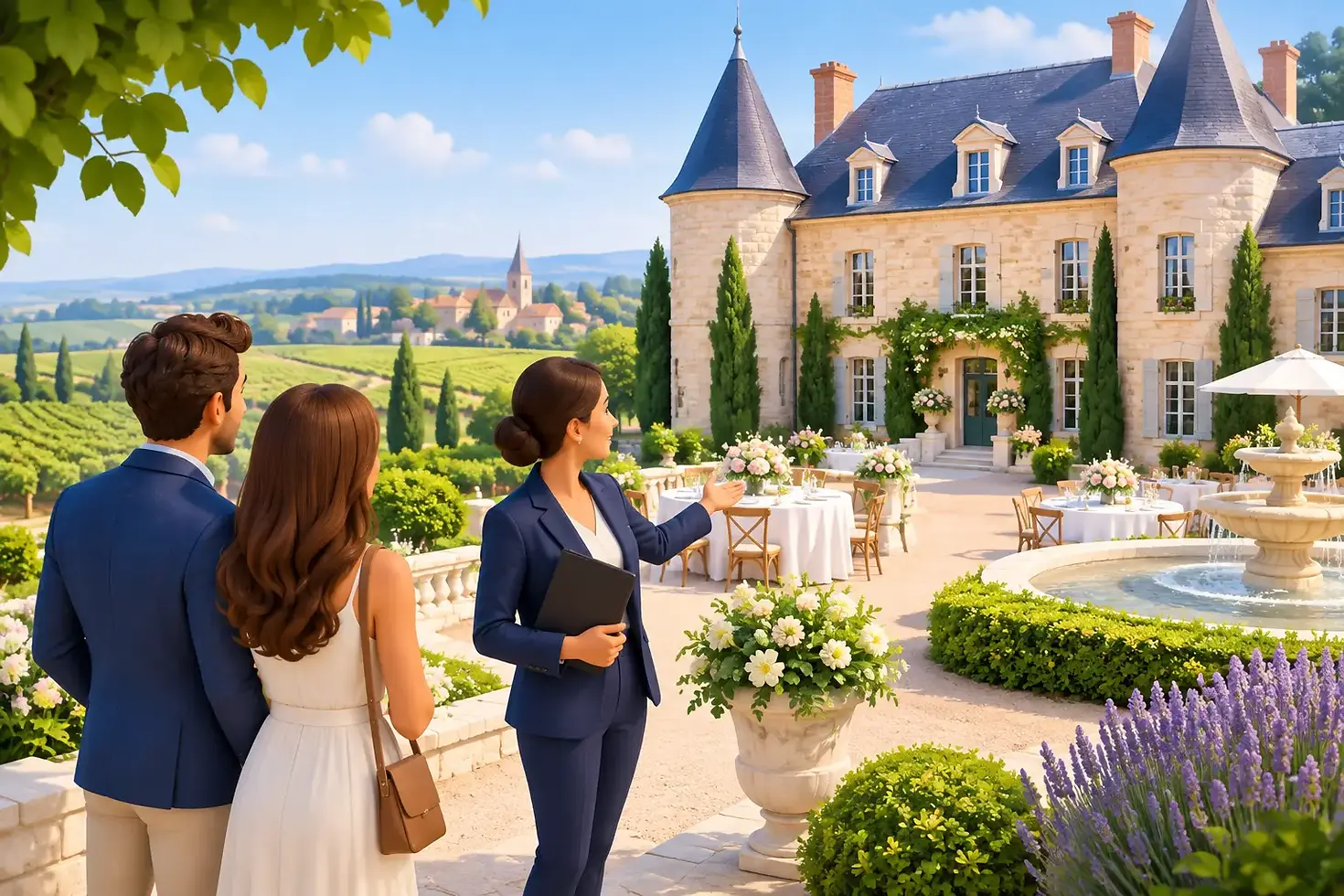
Venue Tour Questions for a French Wedding
A château can look breathtaking in photographs, but your venue tour questions should reveal how it feels when your favorite people arrive, settle in, celebrate, and stay a little longer. The most memorable destination weddings are not built on a beautiful ceremony view alone. They are shaped by the quiet practical details that let everyone relax into the experience.
When you tour a venue in France, look beyond the first impression. Notice where guests will gather over morning coffee, whether grandparents can move comfortably from ceremony to dinner, and how the atmosphere changes when daylight fades. You are not simply choosing a backdrop for one day. You are choosing the setting for a shared chapter with the people you love.
Venue Tour Questions That Shape the Whole Weekend
Start with the questions that define how your wedding will unfold from arrival to farewell. A private estate can create an extraordinary sense of occasion, but the best fit depends on your guest count, priorities, and the kind of celebration you want to host.
Ask whether the property is exclusively yours for the rental period. Exclusivity changes the entire rhythm of a destination wedding. It means no other guests passing through your welcome drinks, no competing event next door, and the freedom to enjoy the pool, gardens, and dining spaces as your own private retreat.
Then ask how many guests can stay on site and what accommodations are available nearby. On-site bedrooms are especially valuable for immediate family, the wedding party, or friends traveling a long way. Nearby partner accommodations can be just as useful for a larger group, provided transportation and check-in arrangements are simple. The important thing is understanding the full guest experience, not just the number of beds inside the main house.
You may also want to ask:
How many nights are included, and can the stay be extended?
Which spaces are available for a welcome dinner, ceremony, reception, and farewell brunch?
Are there restrictions on music, dancing, or celebration end times?
Can guests use amenities such as the pool, games room, gardens, and outdoor dining areas throughout the stay?
A two- or three-night celebration often feels more generous than trying to fit every meaningful moment into a single afternoon. It gives guests time to arrive, connect, and enjoy the setting beyond the wedding itself.
Questions About Ceremony and Reception Spaces
Every couple imagines the first walk into their ceremony differently. You may picture vows in a garden framed by mature trees, an intimate gathering in a historic interior, or a sunlit terrace overlooking the grounds. Ask to see each space as it would be set up for your guest count, rather than only as it appears empty.
Find out where guests wait before the ceremony and whether there is a natural transition from vows to cocktails. A beautiful location can still feel disjointed if guests must wander, stand in direct sun, or cross a long distance between key moments. The most elegant celebrations tend to have an easy flow: ceremony, drinks, dinner, then dancing, with every change of scene feeling intentional.
For your reception, ask about dining capacity in both indoor and outdoor spaces. Long tables beneath the evening sky can be wonderfully romantic, but weather, temperature, and the season matter. An indoor function space should not feel like a reluctant backup plan. It should be somewhere you would be delighted to celebrate, with enough room for a proper meal, speeches, dancing, and your chosen entertainment.
At Chateau Eyparsac, for example, the renovated barn gives celebrations a flexible, atmospheric space alongside the château’s gardens and outdoor dining areas. This combination matters because it lets the day feel beautifully open without relying on perfect weather.
Ask to See the Rain Plan, Not Just Hear About It
Rain plans are one of the most revealing venue tour questions because the answer shows how experienced a team is. Ask exactly where your ceremony would take place if it rains, where cocktails would move, and how quickly the team can make the switch.
Do not settle for a vague assurance that there is “always an option.” Walk through it. Can everyone fit comfortably? Is it well lit? Does it still feel special in photographs? A weather plan is not a compromise when the alternative space has its own character. It is simply another version of your celebration.
Also ask about shade and heat. For a summer ceremony, a sun-drenched lawn may be ideal for photographs but less comfortable for guests during a 30-minute ceremony. Mature trees, parasols, water stations, and a sensible ceremony time can make a significant difference.
Questions About Your Guests’ Comfort
The magic of a destination wedding is that people are traveling to share in your joy. Honor that effort by asking how the venue supports guests at every stage of the stay.
Ask about accessibility, especially if you have older relatives, young children, or guests with limited mobility. Are there ground-floor rooms? Are pathways even and well lit after dark? How far is the walk between the ceremony site, reception space, and accommodations? There is no one right answer, particularly at a historic property, but clear information allows you to plan thoughtfully.
Transportation deserves the same attention. Ask how guests typically arrive, whether parking is available, and whether the venue can recommend local transport for guests staying off site. If your wedding party is spread between the estate and nearby hotels, a simple shuttle plan can make the weekend feel polished and relaxed.
You should also ask about the spaces between the formal events. Is there somewhere for children to play while adults linger over lunch? Can guests gather by the pool the day after the wedding? Is there a comfortable indoor room for a relaxed evening if the weather turns? These are the details that transform a wedding into a holiday everyone remembers.
Questions for Food, Drinks, and Suppliers
A French château wedding naturally invites long meals, excellent wine, and unhurried conversation. Ask whether you may choose your own caterer and bar team, or whether the venue works with preferred suppliers. Preferred lists can save time and bring local knowledge, while outside suppliers may matter if you have a particular culinary vision, cultural tradition, or dietary requirement.
Be clear about logistics. Ask where caterers prepare food, what equipment is included, and whether there are service charges, corkage fees, or cleanup expectations. If you are planning a late-night snack, a champagne tower, or a full next-day brunch, ask about those moments early rather than assuming they fit within the standard schedule.
The same approach applies to florists, musicians, photographers, and planners. Ask whether suppliers have easy access for setup, whether there are sound limits for live music or DJs, and when they can arrive. A venue team that knows the property well can help you avoid small timing issues that become stressful on the day.
Questions That Reveal the Level of Support
The most reassuring answer on a venue tour is not always a simple yes. It is a thoughtful explanation of how the team will help make something happen.
Ask who your main contact will be after booking and how support works in the months leading up to the wedding. Will the team help you understand the layout, recommend local professionals, and coordinate venue access? Is there someone present during the event, and what responsibilities do they manage? A venue coordinator is not necessarily the same as a wedding planner, so it helps to understand where one role ends and the other begins.
You can also ask what couples most often overlook. An honest response may cover timing, guest transport, lighting, outdoor furniture, or the value of allowing enough time for setup. This question often gives you a better sense of the team’s experience than any brochure can.
Finally, ask yourself one question before you leave: can you picture the people you love being happy here? Not just during the ceremony, but over breakfast in the kitchen, around the pool, beneath the lights after dinner, and on the final slow morning together. When a venue offers both beauty and genuine ease, you have found more than a place to host a wedding. You have found a setting where the celebration can truly unfold.


Comments