
7 Trends in Destination Wedding Weekends
- julie60018
- Aug 4
- 5 min read
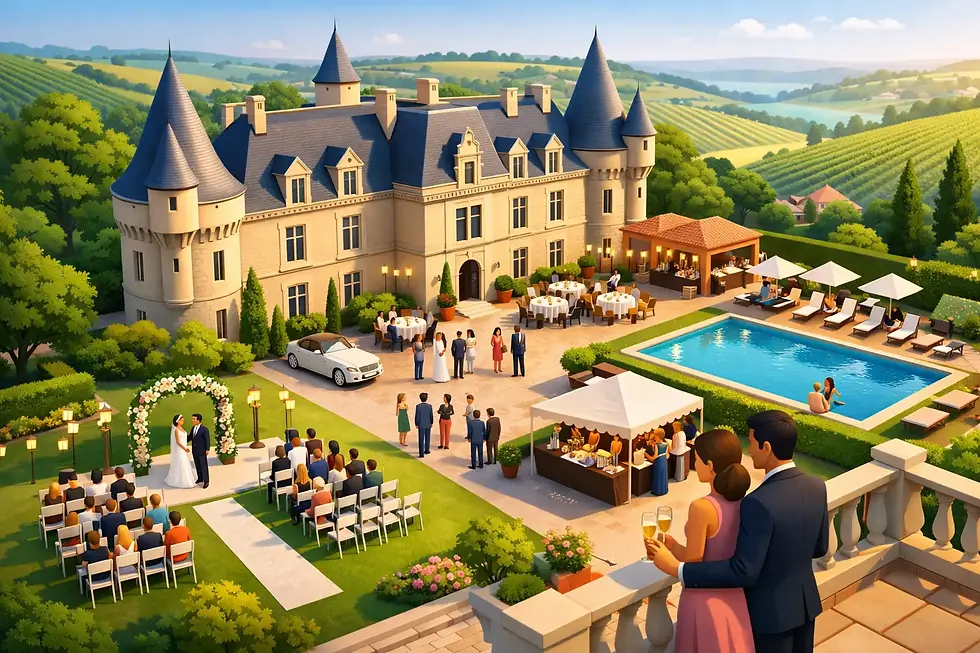
A destination wedding is no longer just a ceremony followed by dinner. The most meaningful trends in destination wedding weekends center on giving everyone time to arrive, exhale, and become part of the story. For couples bringing loved ones across an ocean or across the country, a single spectacular day can feel too brief. A private French estate offers something more generous: a beautiful setting where the celebration unfolds over several unhurried days.
The appeal is not about filling every hour with an activity. It is about creating space for the spontaneous moments that guests remember years later: a coffee by the pool, children racing across the lawn, a late-night conversation beneath the stars, or a long table of family and friends lingering over local wine. Here are the wedding weekend ideas shaping modern destination celebrations.
1. The welcome event sets the tone
Welcome gatherings have moved far beyond a quick drink at a hotel bar. Couples are beginning the weekend with an occasion that feels distinctly connected to the destination, often a relaxed garden aperitif, a candlelit supper, or a casual pizza evening after travel.
This first event does important work. Guests who have never met can settle in before the ceremony, while close family members have a chance to reconnect without feeling rushed. It also gives the couple a more relaxed setting in which to greet everyone personally, rather than trying to do it between photographs and speeches on the wedding day.
The best welcome events feel easy rather than overly produced. At a château, that might mean French rosé on a terrace, sharing boards beneath the trees, and a gentle first glimpse of the grounds that will frame the weekend. The trade-off is budget and planning effort, but many couples find that a simple, thoughtfully hosted evening brings more warmth than an elaborate additional reception.
2. Couples are choosing one private home base
One of the strongest destination wedding weekend trends is the move away from scattered hotel rooms and toward exclusive-use properties. When the wedding party, immediate family, and closest friends stay together, the venue becomes part of the experience rather than merely the ceremony backdrop.
A private estate allows the weekend to have a natural rhythm. The bridal party can gather in the morning without coordinating transport. Grandparents can rest in peaceful surroundings between events. Guests can swim, play games, walk the grounds, or simply enjoy a quiet corner with a book. Those small freedoms make a multi-day celebration feel like a holiday, not a tightly scheduled event.
Of course, not every guest needs to sleep on site. A practical arrangement pairs on-property accommodations for the inner circle with nearby lodging for the wider group. That keeps the estate intimate while allowing more loved ones to take part. At Chateau Eyparsac, for example, the full estate can host 23 guests, with partner-hotel accommodations nearby for a larger wedding party.
3. The ceremony day is becoming less formal, not less beautiful
Many couples still want the romance of a formal ceremony, exquisite flowers, and a beautifully dressed table. What is changing is the pace. Rather than trying to compress every tradition into an afternoon and evening, they are allowing the day to breathe.
A later ceremony is particularly popular for destination weddings. It gives guests time for a leisurely breakfast, a swim, or a quiet morning in the French countryside. It also creates a softer transition into golden-hour portraits, aperitifs, dinner, and dancing. The result is elegant but unforced, with fewer watches being checked and fewer guests feeling they have missed something.
This approach depends on the season and the venue’s layout. High summer may call for shaded ceremony spaces and a later start, while spring or fall can suit an earlier gathering. The most successful timeline is not copied from a wedding magazine. It is designed around light, weather, guest comfort, and the personality of the couple.
4. Meals are becoming the heart of the celebration
Food has always mattered at a French wedding, but couples are now giving meals more time and more character. Instead of treating dinner as the necessary pause before dancing, they are making it one of the weekend’s central experiences.
Long-table dining remains especially compelling for château celebrations. It creates a sense of occasion while keeping the room warm and communal. Family-style dishes, regional ingredients, shared desserts, and carefully chosen wines encourage conversation in a way that a fast-paced plated meal sometimes cannot.
The trend is not necessarily toward extravagance. It is toward hospitality. A relaxed lunch the day after the wedding can be just as memorable as the reception meal, especially when it lets guests retell the previous night’s best moments. Couples can choose a formal multi-course dinner, an outdoor feast, or something delightfully simple. The question is whether the meal feels like them and whether it gives guests time to enjoy the setting.
5. Recovery time is now part of the plan
The farewell brunch has become a destination wedding essential, but it is evolving into a slower final day. Rather than asking guests to pack and depart immediately after the reception, couples are inviting them to linger over pastries, coffee, and a final shared meal.
For a multi-day estate stay, this can extend into an afternoon by the pool, a casual picnic, or a walk through the surrounding village and countryside. It is a welcome counterpoint to the energy of the wedding night. Guests who have traveled far appreciate having a gentle landing, and couples often treasure this time because the pressure of the main event has passed.
There is no need to plan a formal farewell program. A beautiful table, good coffee, and an easy invitation to stay awhile can be enough. The luxury lies in not needing to hurry.
6. Personal touches are replacing generic entertainment
Destination weddings are becoming more personal in subtle ways. Couples are choosing experiences that reveal why they chose a place, rather than adding entertainment simply to fill the schedule. That might mean a local wine tasting, a morning market visit, lawn games during aperitifs, or a playlist built from family favorites.
This does not mean every wedding needs a packed itinerary. In fact, overscheduling is one of the easiest ways to lose the relaxed atmosphere guests hope for when traveling to France. Choose one or two moments that offer a sense of place, then leave room for people to make their own memories.
Thoughtful details also matter. A welcome note with practical information, late-night snacks after dancing, baskets for poolside towels, or a quiet space where older guests can take a break all signal care. They are not always the details that appear in photographs, but they are often the details people talk about afterward.
7. Flexibility is the new luxury
Perhaps the most valuable of all trends in destination wedding weekends is a shift in perspective: luxury is not only visual. It is the freedom to shape a celebration around real people.
Flexible rental periods allow guests to arrive before the ceremony and remain afterward. Indoor and outdoor spaces provide reassurance when the weather changes. A dedicated getting-ready room, places for children to play, and comfortable spaces for dining and dancing make the weekend feel effortlessly considered. Behind every seemingly relaxed celebration is a venue that can adapt.
Couples should ask practical questions early. How many guests can stay nearby? Is there a graceful backup plan for rain? Can the ceremony, dinner, and dancing each have their own atmosphere? Is there enough room for guests to gather without feeling crowded? The answers shape the experience far more than a passing trend ever could.
The loveliest wedding weekends do not ask guests to admire a beautiful place from a distance. They invite them to belong there for a little while - to celebrate at a long table, wake up to the quiet of the countryside, and leave with the feeling that they shared something far richer than one extraordinary evening.


Comments